Overview
Twitter's advertising platform was falling behind Meta and Google, and the numbers showed it: 78% of new SMB advertisers churned within 30 days. I led a five-month initiative to build a north star vision for the entire advertiser experience. With 16 designers organized across five workstreams, we produced 65+ concepts spanning nine stages of the customer journey. More than half reshaped 2022 roadmaps, and the work led leadership to consolidate all SMB advertising under my team.
Twitter Ads Had a Reputation Problem
By 2021, Twitter's advertising platform had fully earned its reputation for being fragmented, dated, and difficult to use. The company's ad business had grown organically over years, and the result was a collection of disconnected experiences that never quite added up. It was a bit like a restaurant where the appetizers come from one kitchen, the entrees from another, and the bill from a third, and somehow none of them share a menu. Advertisers juggled Twitter Ads for campaign management, Twitter Analytics for organic performance, Twitter Business for educational content, and Quick Promote for simple promotions. No cohesive thread connected any of it.
For enterprise brands with dedicated agency teams, this complexity was manageable. For everyone else, it was a wall. 78% of new SMB advertisers churned within their first 30 days. That's not a product problem you can patch with better tooltips.
Customer satisfaction data told a consistent story: Twitter offered powerful targeting and reach, but the platform itself made it unreasonably difficult to realize that value. Meanwhile, Meta and Google were shipping sophisticated creative tools, automated optimization, and seamless onboarding that made our offering feel like it belonged to a previous era.
Twitter was simultaneously investing in real performance advertising capabilities (new ad formats, improved measurement, better audience targeting) but those enhancements risked becoming isolated improvements if nobody could articulate how they fit together. An Ad Age report on an internal pitch deck (opens in new tab) laid out the strategic case for a rebuilt advertising platform — the design vision we were about to build would give that strategy a customer-centered foundation. This was the north star that guided our work. Not a redesign of one screen or a fix for one workflow, but a shared picture of where the entire advertiser experience was headed.
Working with the VP of Design, we scoped and initiated the project.
The Brief We Wrote
The advertising platform faced problems that couldn't be solved through isolated feature work. Different advertiser segments encountered completely different experiences with no path for growth between them. A creator using Quick Promote had no natural way to become a campaign manager user. Onboarding provided almost no guidance, and the tools themselves assumed expertise that most advertisers didn't have. Compared to competitors, our campaign management felt rudimentary, our creative tools were basic, and years of accumulated technical debt had cemented a brand perception that tactical fixes alone couldn't reverse.
The question wasn't whether these problems existed. Everyone knew they did. The question was whether Design could be the ones to frame the response.
16 Designers, Five Workstreams, Five Months
I assembled a team of 16 designers spanning product, systems, visual, and content disciplines, along with two design strategists to facilitate workshops and a program manager to keep everything organized. Researchers, Product Managers, Engineers, and sales representatives participated in ideation and provided feedback throughout.
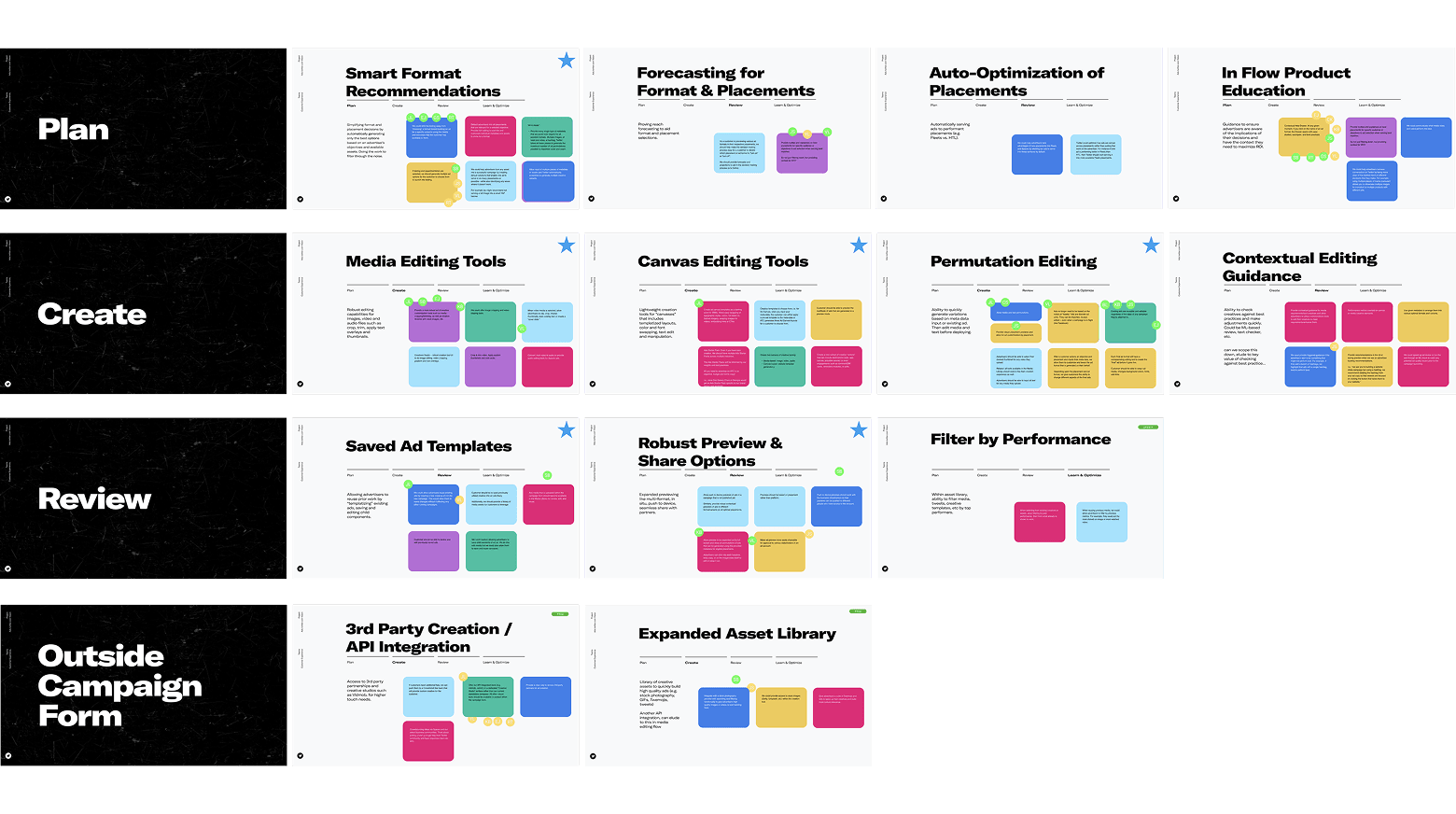
We organized the work into five sequential workstreams, each attacking a different dimension of the advertiser experience. Every workstream followed the same three-week sprint structure: week one for cross-functional workshops and prioritization, then two weeks of design iteration with regular critique sessions. Running them in succession meant each workstream could build on what the previous one learned, and moving from sketches to high fidelity in a single sprint kept the pace honest and the ambiguity low.
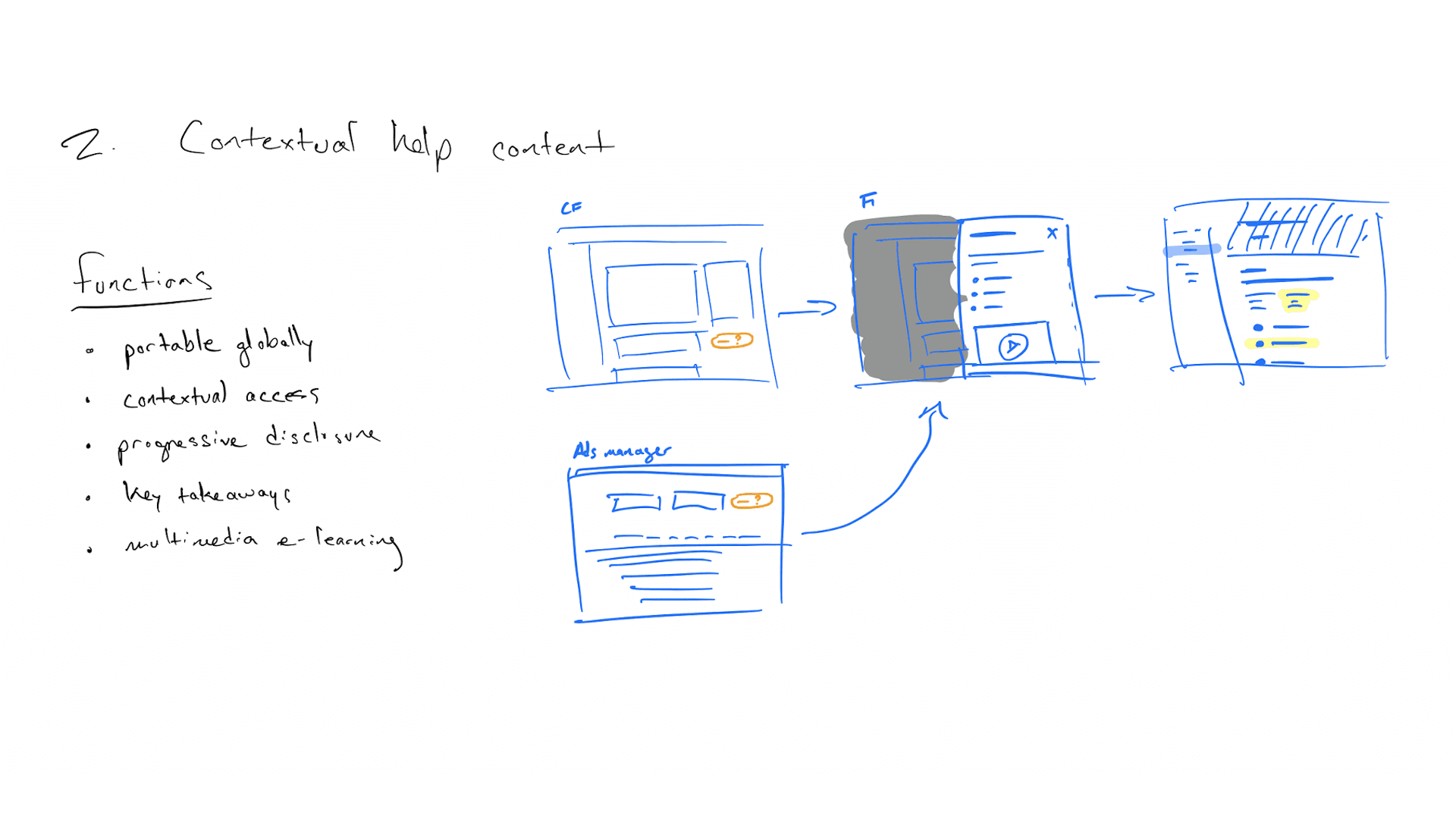
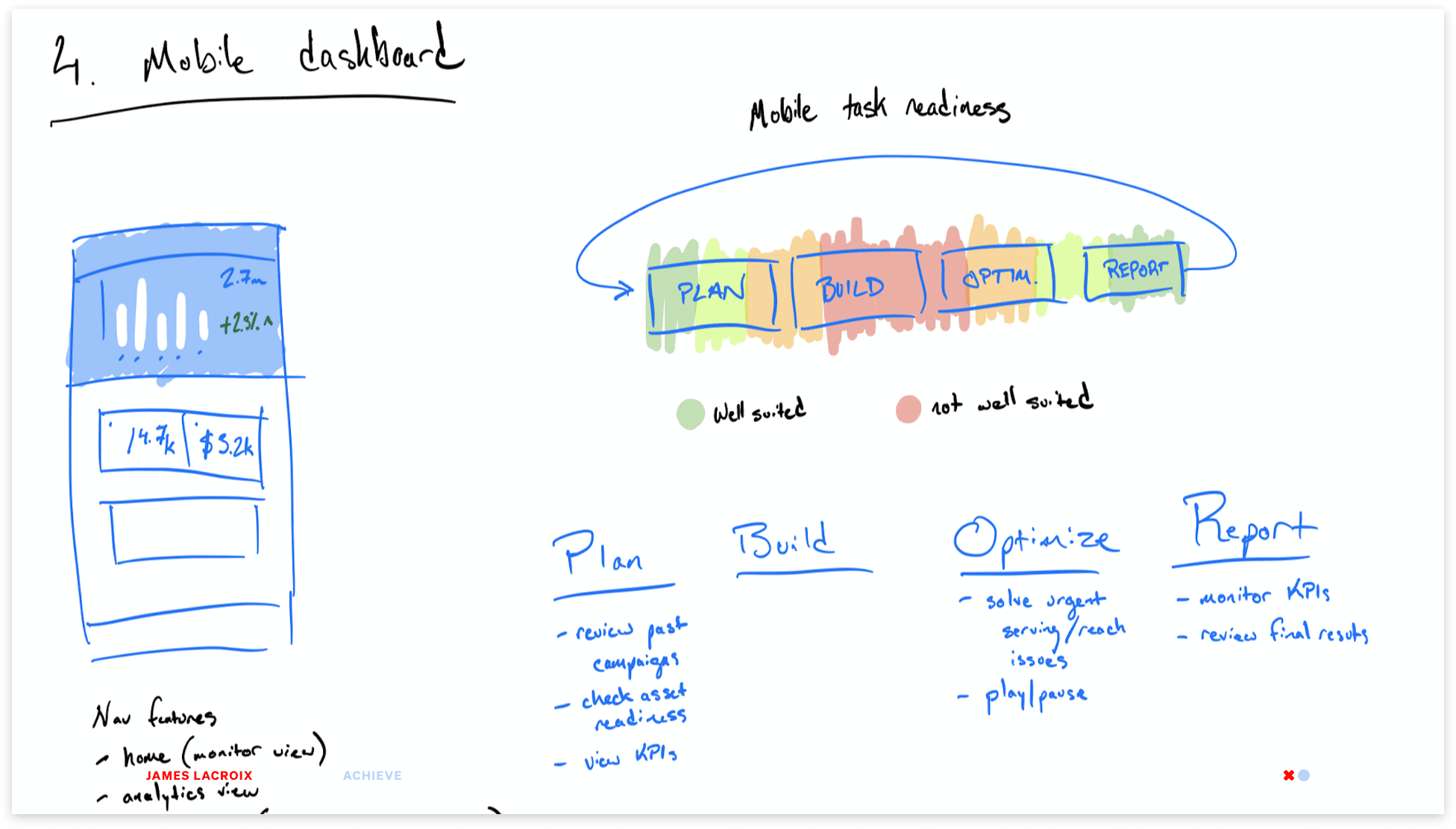
I spent a significant amount of time in the work itself, sketching with designers to establish shared mental models before we invested in production-level concepts. It's a habit I've never been willing to give up as a manager. When you're physically working through a problem with your team, you catch misalignment early and build conviction faster than any review cycle can.
What the Five Workstreams Produced
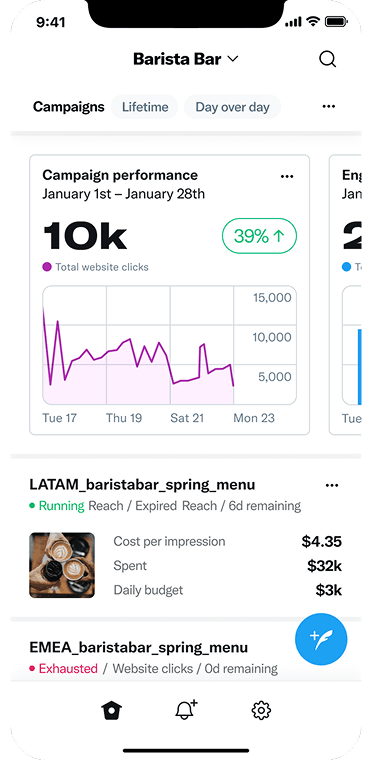
Project One tackled the most fundamental question: could we build a single front door for all advertiser types? Rather than maintaining separate experiences for creators, small businesses, and enterprise clients, we designed a dynamic interface that adapted to different customer needs while maintaining a cohesive identity. We also explored what the role of mobile could be for advertisers, something Twitter Ads had largely ignored.
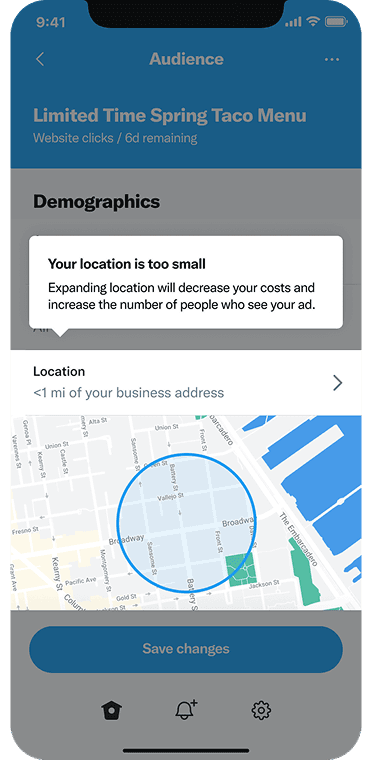
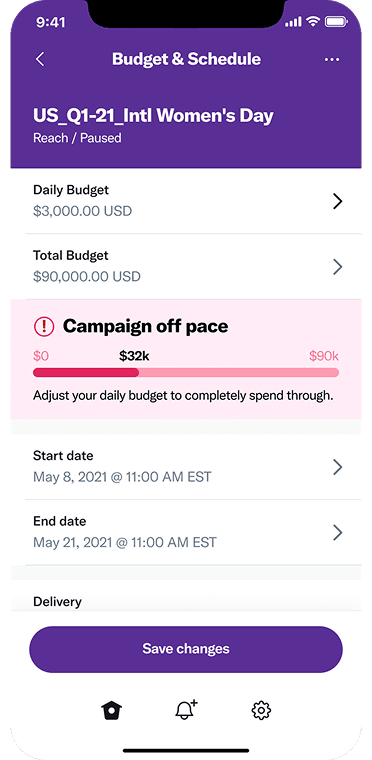
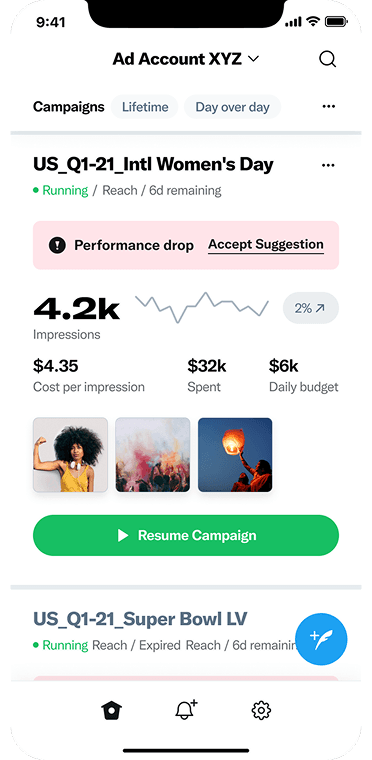
First 30 mapped the complete journey from a new advertiser's first 15 minutes through their first month. Guidance systems, smart defaults, educational content, and proactive support, all designed to help advertisers reach their first win before they had a reason to leave.
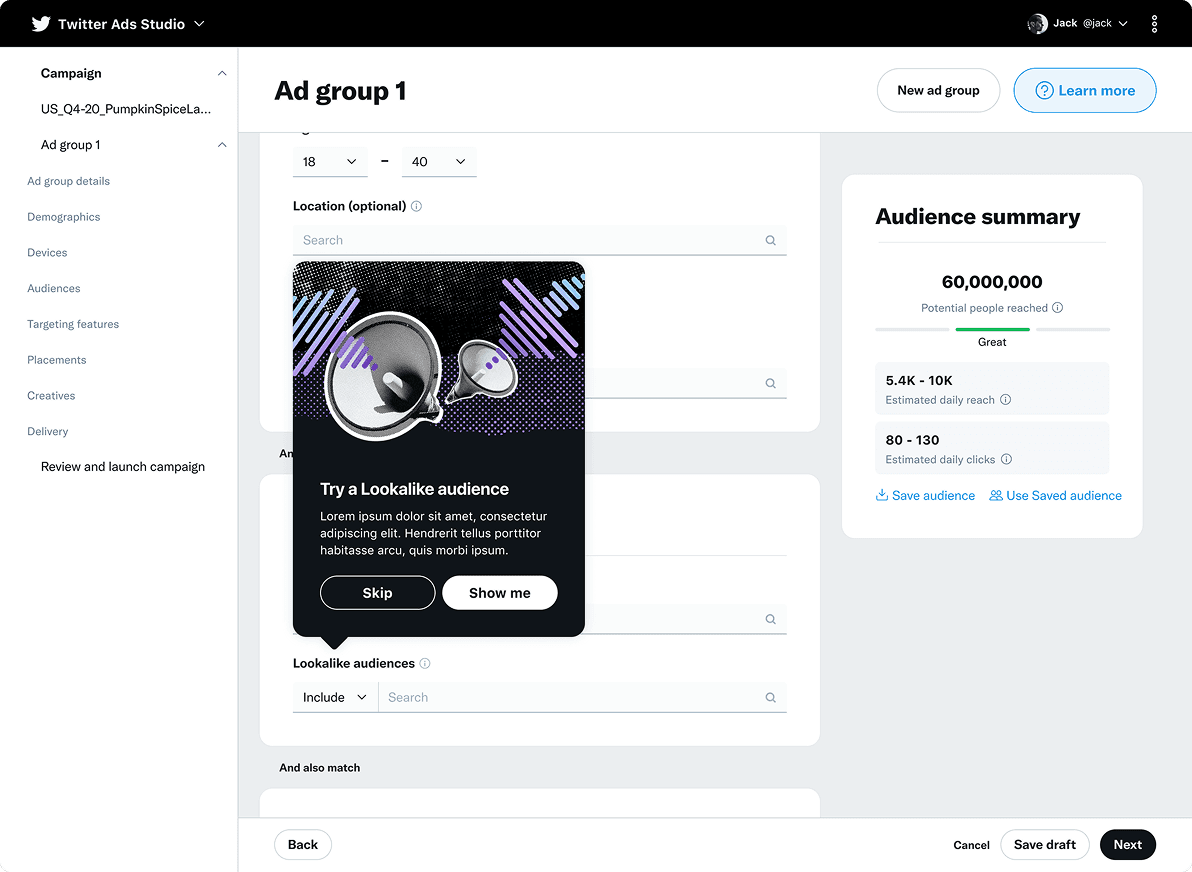

Campaign Management was the most sprawling scope of the five. We examined audience definition, targeting, forecasting, bidding, testing, measurement, and brand safety (basically every surface an advertiser touches after clicking "Create Campaign"). Each touchpoint needed to be both more intuitive and more capable.
Superior Ad Creation designed a creative workflow with template libraries, optimization recommendations, contextual previews, and support for emerging formats. The principle was simple: advertisers shouldn't need to leave Twitter to build great ads.
New Brand addressed something the other four workstreams couldn't fix on their own. Years of accumulated debt had cemented a perception that no amount of feature improvement could undo without a clear visual and verbal signal that things had changed. This workstream delivered a refreshed brand identity that made advertising on Twitter feel modern and approachable.
Throughout the process, I worked to ensure our vision connected with existing initiatives rather than competing with them. We needed to show how current roadmap items fit into a larger narrative while identifying gaps that needed attention. A vision that ignores what teams are already building is just a poster. A vision that makes their work feel like part of something bigger is a strategy.
65 Concepts, One Shared Direction
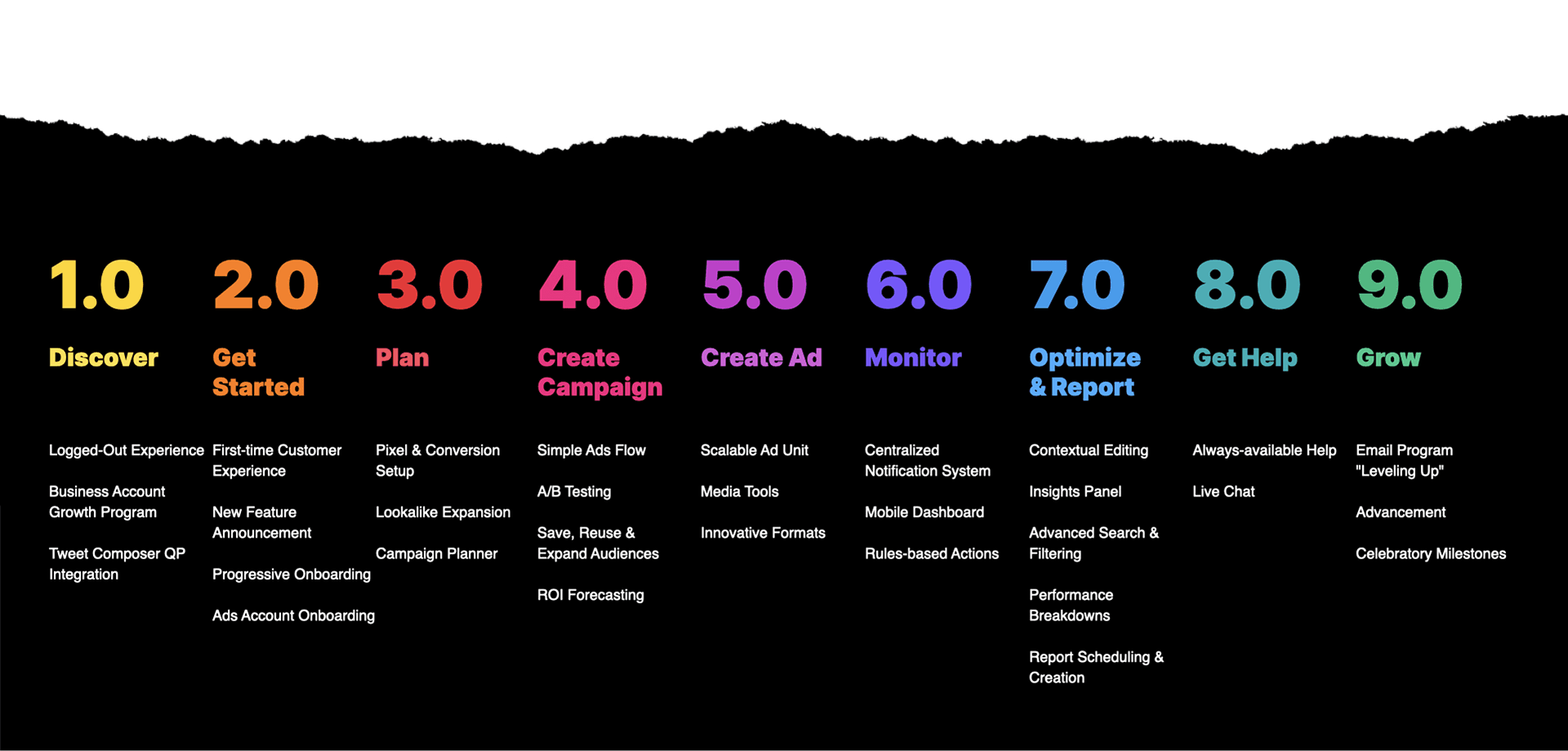
Over four months, the team produced more than 65 concepts spanning nine stages of the advertiser journey. We organized these into presentations tailored for different audiences: strategic rationale and business impact for product leadership, technical feasibility and implementation approaches for engineering teams.
To make the vision stick, we produced a highlight video that followed a single advertiser's experience across the platform, from first click through to growing, successful campaigns. Static screens only take you so far. The video became the most effective tool we had for building excitement and alignment across the organization. Executives shared it. Product Managers referenced it in planning. It gave people something to point to when they needed to explain where we were headed.
A unifying experience that prioritizes simplicity and self-service, unlocking the power of Twitter and ever-growing success from day 1 for everyone.
Results
Roadmap Impact
More than half of the 65+ concepts made it onto product roadmaps for 2022, with additional concepts scheduled for 2023. Several concepts became significant products in their own right, including Dynamic Product Ads, which launched to industry coverage and delivered measurable improvements in advertiser cost-per-acquisition. The vision gave teams a framework for evaluating which initiatives would deliver the most value and how they should connect.
Organizational Changes
The clear SMB strategy led leadership to consolidate all SMB-focused initiatives under my team, including Simple Ads and Quick Promote. The VP of Revenue Design also expanded my role to build out a management layer overseeing the entire Ads Design team.
Design System Evolution
Our partnership with the Design Systems team informed decisions for Twitter's new Visual Design Language rollout across the platform. The patterns and principles we established scaled well beyond Twitter Ads.
Cultural Shift
The project changed how the organization thought about design-led vision work. By investing time upfront to align on direction, we created a foundation that made subsequent execution faster and more coherent. Teams had something real to reference when making tactical decisions.
What This Project Taught Me
Partnering with the VP of Design to initiate this work, rather than waiting for a top-down mandate, established Design as a strategic partner rather than a service team. That distinction matters more than most designers realize. When you're the one framing the problem, you have a fundamentally different kind of influence than when you're responding to someone else's brief.
The other lesson is about artifacts. A strategy deck can align a room. A highlight video can align an organization. The difference between an idea that lives in a document and an idea that lives in people's heads is usually about whether you showed it or told it.
Twitter's acquisition ultimately prevented full realization of this vision. But the approach (combining research synthesis, collaborative ideation, detailed concept development, and compelling storytelling) created a playbook I've continued to use. The specifics change. The principle that Design should be the one holding the pen on product vision hasn't.